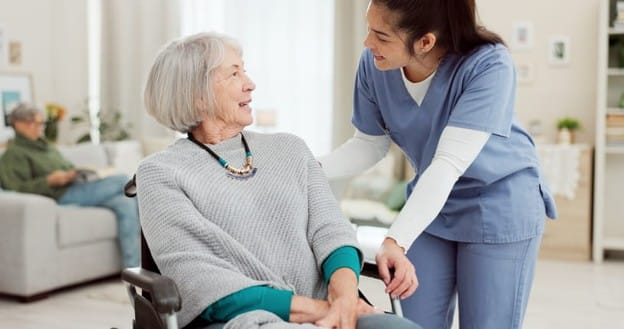
The first 72 hours in a skilled nursing facility (SNF) involve transitioning to SNF healthcare. Once you’ve worked out how to get an older adult who requires personal or post-hospital care into a skilled nursing facility, you can ease their transition by being involved during their first 72 hours in skilled nursing care.
What Happens When A Loved One Arrives At A Skilled Nursing Facility?
There may come a point when it is time for an older adult to receive skilled nursing care. Reasons people need skilled nursing care include:
- Fall risk
- Inability to perform activities of daily living
- Post-hospital recovery
- Post-illness recovery
- Post-injury recovery
Upon arrival, new SNF residents go through the skilled nursing admissions process.
The Admission Process
SNF residents must complete insurance forms and provide their medical history. Medical professionals will also review the residents’ medications and secure them.
New residents will meet SNF staff, including:
- Case managers
- Doctors
- Nurses
- Social workers
- Therapists
Staff then show new residents their room, how to use safety equipment and call buttons, and how to use handheld showerheads, grab bars, and other bathroom features.
The Initial Nursing Assessment And Evaluations: What Assessments Are Typically Completed During The First Few Days?
During the first 72 hours, SNF residents undergo several therapy evaluations and medical assessments, including:
- Checking vital signs
- Health evaluation
- Medication review
- Occupational therapy assessment
- Physical therapy assessment
New residents also undergo a skin integrity assessment and fall-risk check. Fall risk checks are crucial. Each year, 1.4 million older adults are hospitalized for fall-related injuries.
What To Bring
Families should provide their loved one’s skilled nursing facility with the following:
- Medical and legal documents:
- Emergency contact information
- Hospital discharge summary (if applicable)
- Insurance cards
- Identification
- Advance directives and other legal paperwork, such as power of attorney for healthcare
- Medical supplies:
- Assistive devices
- Medications and prescriptions
- Personal items:
- Cell phone
- Clothes (casual/easy to wear clothing is best)
- Jacket
- Keepsakes
- Pajamas
- Photos
- Robe
- Slippers
- Socks
- Toiletries
- Underwear
A favorite blanket can also help new residents feel at home when transitioning to a skilled nursing facility.
How Does The First 72 Hours Help Establish Goals For Recovery?
The health and therapy assessments identify issues to address. Each professional who conducts assessments shares the results with the care team, identifying concerns, reasonable goals, and treatments to achieve those goals.
How Can Family Members Participate During The First 72 Hours?
Family members can participate in their loved one’s care during the intake period by asking questions. This helps you know what to expect and shows your loved one you’re actively involved in their care.
Family members can attend care meetings. These meetings offer you an opportunity to meet medical professionals working with your loved one. They also let you share personal information about your loved one and ensure the team’s goals align with your expectations.
Who May Be Involved In A Resident’s Care Team? How Does The Care Team Learn About A Resident’s Medical History And Current Needs?
Any family member interested in post-hospital care for their loved one can join their loved one’s care team. Attending care team meetings allows you to learn how to support your loved one and help them when they return home.
Others who may be involved in the care team include:
- Case managers
- Doctors
- Nurses
- Occupational therapists
- Social workers
- Physical therapists
- Speech therapists
The care team learns about your loved one’s medical history and needs from the following:
- Intake assessments
- Intake paperwork
- Information provided by loved ones
- Information provided by the resident
Creating An Individualized Care Plan
Each medical professional involved in care planning confirms the resident’s baseline or starting point for typical health and capabilities. Medical professionals identify the ultimate recovery goal, then determine which treatments to use to reach it.
For example, if a resident is recovering from knee replacement surgery, the physical therapist may note that the resident needs a walker to walk safely. Then the goal may be for them to walk without assistive devices. The physical therapist would introduce exercises and other treatments (such as cold therapy to reduce swelling) to increase the time the resident can move with the walker before transitioning to a cane.
Questions Families Should Ask The Care Team
Family members should ask about treatment plans, long-term recovery goals, how long treatment will take, and how they can support their loved one’s treatment.
How Are Medications Reviewed And Managed?
The SNF’s pharmacist reviews medications and prescriptions during the resident’s intake. Nursing staff follow the instructions provided and give residents their medications.
When Does Rehabilitation Or Therapy Begin?
Rehabilitation begins within the first 72 hours. Residents may have treatment sessions within 24 hours of their arrival.
What Should Families Expect As Their Loved One’s Stay Progresses?
Families should expect to see improvements in their loved one’s health during their stay. Ideally, residents should feel more confident in their ability to restore independence as they progress toward their treatment goals.
How Families Benefit From Involvement With Their Loved One’s Skilled Nursing Care Team
Being involved during the intake period and attending care plan meetings ensures you’re fully informed, understand the admissions process, and are aware of the treatment your loved one is receiving. It helps you set clear expectations, so you can reassure your loved one about the process and manage their expectations.
Participating also allows for clear, open communication with your loved one’s care team. You can feel confident in how your loved one’s care team creates their care plan and supports the rehabilitation process.
Ultimately, your involvement will give you confidence in the long-term benefits as your loved one transitions to a SNF from home or hospital care.
Sources:
Activities of Daily Living. (2024).
Facts About Older Adult Falls. (2026).