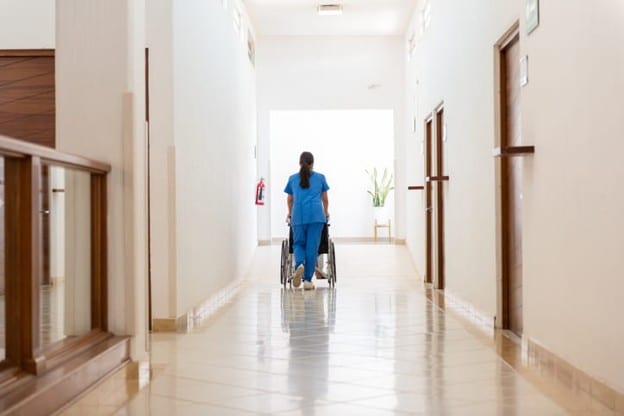
Roughly 64% of skilled nursing facility patients are considered “short-term” patients who require care for less than 100 days to recover after a hospital stay or major surgery. In most cases, these patients will be discharged home but still require a care plan.
Keep reading to learn how to prepare for the discharge process.
How Do You Know When Your Parent Is Ready To Leave Skilled Nursing?
Some signs it’s time for your parent to be discharged home include the following:
- They no longer require 24/7 observation.
- They no longer require professional medication management, wound management, etc.
- They’re mobility has improved enough that they are no longer a hazard to themselves.
- It’s been determined that they can meet enough of the tasks of daily living to sufficiently live in their home.
- It’s been determined that ongoing therapies, such as physical therapy, can be continued at home and on an outpatient basis.
- The home is determined to be a safe space for them.
- A reliable caregiver is set up.
- Support services are set up for continuing care.
The biggest indicator that your parent is ready to leave skilled nursing is when their doctor signs off on it. It’s also important that you and your parent feel confident in your ability to handle their care at home.
What Should Families Discuss With Their Parent’s Care Team Before Discharge?
According to The American Association of Post-Acute Care Nursing, ensuring that you’re prepared to take care of your elderly parent’s needs at home and ensuring everyone understands the discharge instructions significantly reduce the risk of a patient being readmitted to the hospital.
When discussing discharge care for an elderly parent, it’s important to ask questions about your upcoming role, such as:
- What medication(s) will my parent need at home?
- What follow-up appointments do I need to schedule?
- Do I need equipment and/or medical supplies?
- Are there any modifications to my home that you would suggest for my parents’ safety?
- What daily activities will my parent require assistance with?
- Will therapy continue after their discharge?
- Do I need to assist with at-home exercises to maintain physical/occupation therapy?
- Who do I contact if I have any questions or concerns as we adjust?
- Are there warning signs I should watch for that could indicate a problem?
How Can Families And Caregivers Prepare For Their Parent’s Discharge Home?
Did you know that discharge care is such an important part of nursing care that it is required under Medicare that facilities provide discharge planning services? In fact, it is such an important aspect of post-hospital care that they even provide their own Medicare Discharge Planning Checklist to be filled out throughout the process of staying in a skilled nursing facility.
The top two biggest things to consider to make the transition home as safe and as smooth as possible are the following:
Consider Mobility And Fall Risks
The fall risk for the average adult 65 or older is roughly one in four. Not only can multiple health issues increase the risk of falls, but stress can potentially increase the risk as well (and moving is always stressful).
Taking precautions, such as fall-proofing your home, having a tentative caregiver, and ensuring that your parent has access to the proper mobility aids, can decrease this risk drastically.
Create And Review A Discharge Checklist
Creating a discharge checklist helps ensure nothing gets forgotten during the final discharge.
Things to consider adding to your discharge list include the following:
- Ensure all medications are up to date, filled, and that you know how/when they are administered.
- Confirm any follow-up appointments.
- Ensure you understand therapy recommendations.
- Make arrangements for necessary medical equipment. for necessary medical equipment
- Prepare a comfortable and safe room for them in your home.
- Review any mobility and fall prevention requirements throughout the entire house.
- Confirm who will be driving them home.
- Confirm who will help in the home.
- Have all important healthcare contact information saved.
- Ensure you understand when contacting a healthcare provider is necessary.
How Haven Health Assists Families With Discharge Care
Haven Health is committed to individualized skilled nursing care that offers support along the way to recovery.
At Haven Health, we understand the stress that transitioning periods can cause patients and their families.
This is why our personalized care plans include assistance with transitioning from the hospital to a stay with us to assistance with their discharge home.
Benefits Haven Health Provides For Families
Haven Health provides the following benefits:
- An easier transition home
- Superior understanding of continued care needs
- Better caregiver preparedness
- Safer recovery at home
- Reduced stress surrounding discharge
Having a discharge care plan can make the discharge home for your elderly parent a smoother process. For any additional home care after hospital discharge tips, don’t hesitate to seek out Haven Health.
Sources:
Fast Facts. (2025).
Skilled Nursing Facility Services. (n.d.).
Steps to a Strong Discharge Process. (2024).