Older adults are discharged from hospitals and skilled nursing facilities when their health improves. However, this doesn’t mean they don’t still have ongoing health issues that can impact their abilities. Older adults actually have a greater risk of falling after being hospitalized or, in some cases, after treatment at a skilled nursing facility (SNF).
Preventing falls and supporting an older adult’s full recovery involves adjusting their home environment to reduce fall risk.
Why Are Older Adults At Greater Risk Of Falls After A Hospital Or Skilled Nursing Stay?
Reasons fall risks increase after staying in a hospital or SNF include the following:
- Difficulty balancing
- Effects of benzodiazepines and other psychoactive medications
- Fatigue
- Injured limbs
- Muscle loss
- Weakness
Older adults may also be overconfident when they return home. They may forget to use assistive devices that were part of their routine during their hospital or SNF stay, increasing their fall risk.
Common Causes Of Falls In Older Adults
Common reasons older adults fall include the following:
- Balance issues
- Blood pressure changes
- Delayed reflexes
- Fall hazards
- Illness
- Issues with coordination, gait, and muscle weakness
- Medications
Poor footwear can also cause falls.
What Areas Of The Home Should Families Check For Potential Fall Risks?
Check every area of the home for fall risks; however, focus on the areas the older adult uses most.
Locations where falls are most common include the following:
- Bathroom
- Bedroom
- Hallways
- Kitchen
- Living room
- Stairs
How Can Families Identify Fall Hazards In The Home?
A thorough survey can help you identify fall risk factors.
Things to look for include:
- Clutter
- Cords
- Loose carpet or floorboards
- Poor lighting
- Slippery surfaces, such as tubs and floors
- Uneven flooring
How To Reduce Fall Risks
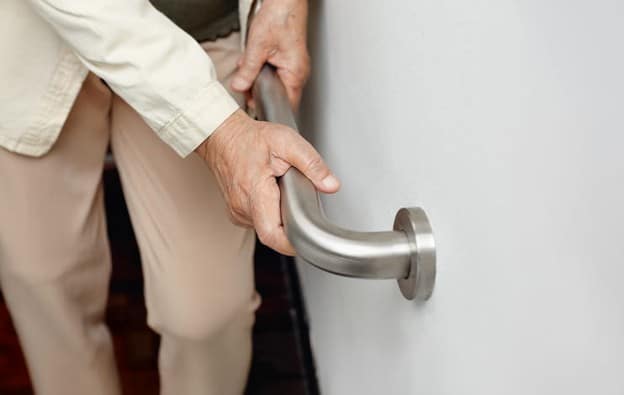
You can promote fall prevention at home by installing handrails for extra support and make sure you install handrails on both sides of the staircase. You can also promote fall prevention in the home by eliminating or compensating for safety hazards in specific areas.
Make Bathrooms Safer
You can reduce the risk of falls in the bathroom by:
- Installing grab bars beside bathtubs and showers
- Installing grab bars by toilets
- Using non-slip mats
Also, keep non-slip mats by the bath or shower and avoid loose mats.
How To Improve Lighting
Natural light improves lighting, but only during the day. You may also need to replace the current lighting with LED lights with higher lumen counts to improve the lighting. You may also need to add lights throughout the home.
Remove Tripping Hazards
You can reduce fall risks by removing clutter. Ensure pathways are clear, so your loved one doesn’t have to navigate around items on the floor.
Loose rugs and flooring are tripping hazards. Ensure all flooring is secure and level to prevent falls. You can also improve safety by replacing mats in the kitchen, bathrooms, and at entryways with non-slip mats.
How Can Proper Footwear Help Prevent Falls?
Foot pain and poor footwear can increase fall risks. Well-fitting shoes that provide adequate support can reduce pain and improve mobility, lowering fall risk.
Also, avoid slip-on shoes and choose ones with fasteners. Good footwear should also have buckles, laces, or straps and not be too loose.
Ideal footwear for older adults should also be flat or have a very low, wide heel. Shoes with non-slip soles will also reduce the risk of a fall.
When Should An Older Adult Use A Cane, Walker, Or Other Mobility Aid?
Older adults should use a cane, walker, or mobility aid if they notice they’re unsteady and relying on walls for support when walking or if they almost fall.
They should also follow guidance from their doctor or rehabilitation team, since they may be instructed to use a mobility aid after leaving the hospital or SNF because of muscle weakness or medication changes.
How Can Physical Therapy Help Improve Strength, Balance, And Mobility?
Physical therapists teach patients specific exercises to rebuild muscle and improve balance. Treatment plans are customized to improve each patient’s mobility.
Why Is It Important To Follow The Care Team’s Recommendations After Being Discharge?
Older adults should follow their care team’s recommendations after being discharged to support recovery and prevent injuries.
What Should Family Caregivers Do If They Are Concerned About A Loved One’s Balance Or Ability To Move Around At Home Safely?
If family caregivers are concerned about their loved one falling at home, they can check the home, remove fall hazards, and add safety features. Family caregivers can also reduce fall risks by using safe transfer techniques when helping their loved one stand or transfer to a chair.
You may also need to hire additional caregivers to help prevent falls.
How Can Haven Health Help Families Who Are Concerned About A Loved One’s Recovery, Mobility, Or Fall Risk?
Family caregivers can discuss their concerns with their loved one’s Haven Health care team before being discharged. Our team members will provide guidance to help eliminate fall risks.
When Should Families Reach Out To Haven Health For Additional Care Or Support?
Reach out to Haven Health for additional care or support if your loved one is having mobility and balance issues. Your loved one may benefit from short-term skilled nursing care if you’re struggling with burnout, or your loved one falls and needs post-fall care.
Our team is here to provide the support you need to ensure your loved one’s recovery.
Sources:
Cox-Roush, D. (2022). How the Right Shoes Can Protect You From Falling.
Falls. (2024).
Jacobson, C. (2021). Reducing falls for older adults: What are the trouble spots in your home?