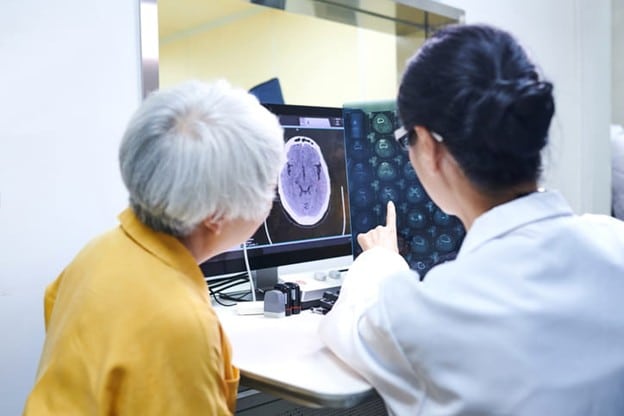
According to the National Institute of Health (NIH), a 2025 research study suggests that as many as 42% of people over the age of 55 will eventually develop dementia. This means you should be prepared to notice if your loved one is beginning to experience dementia by learning the three stages of dementia, and how dementia senior care can help.
What Are The Three Stages Of Dementia In Seniors?
According to the Cleveland Clinic, the three stages of dementia are:
Early-Stage Dementia
Early-stage dementia is mild with symptoms such as memory loss and trouble thinking becoming noticeable but having minimal effects on daily life. At this stage, patients are still able to maintain the majority of their own self-care.
Mid-Stage Dementia
At this stage of dementia, the disease progresses to the point that patients may still be able to do some or most things but are beginning to have obvious difficulty. Thinking and memory become increasingly strained with most patients requiring reminders to remember things.
Late-Stage Dementia
In this stage, the disease progresses to the point that patients can no longer care for themselves as the majority of thinking skills are diminished. Patients at this stage usually require dementia senior care for even basic tasks, such as grooming, dressing, and eating.
What Warning Signs Should Family Members Watch Out For?
It’s important to understand that there are multiple types of dementia. Therefore, an official diagnosis is always going to be the first step. The different types of dementia are put into the following categories:
Primary Dementia
This type of dementia is when a disease in the brain is causing dementia, such as Alzheimer’s disease, Lewey Body dementia, frontotemporal dementia, etc.
Secondary Dementia
This type of dementia is when something goes wrong in the body that causes dementia as a secondary symptom. This can happen due to certain types of infections, alcohol use, nutritional deficiencies, medication side effects, etc.
Reversible Dementia
Some secondary dementia cases can be reversible. For example, if the cause of dementia was an infection, curing the infection will usually make the symptoms the patient was experiencing cease.
Regardless of the cause of dementia, the symptoms of dementia can include one or more of the following:
- Problems communicating (trouble putting thoughts into words — verbally and written)
- Memory loss (forgetting recent activities, names, or repeating themselves a lot)
- Difficulty following directions (forgetting how to do routine tasks or misplacing frequently used items)
- Struggling to understand and use language (can include trouble reading, writing, or understanding words)
Dementia can often be accompanied by behavioral and psychological symptoms as well, such as:
- Easily upset and agitated
- Anxiousness
- Loss of interest and/or depression
- Disorientation from forgetting where they are or what time it is
- Easily frustrated by activities that used to be easy for them
- Restlessness
- Trouble with sleep
When Is It Time To Seek Professional Care And Support?
While it can be difficult to admit that you and/or your loved one needs help, getting professional care and support sooner rather than later tends to be better. This can be especially true in the case of primary dementia as the majority of diseases that cause dementia can be improved and/or delayed with treatment.
For example, while there is no cure for Alzheimer’s disease, there are treatment options that can reduce cognitive and functional decline in the earlier stages.
When Should Families Consider Memory Care?
Looking into memory care should happen as soon as possible following an official diagnosis. Seeking assistance, support, and learning tips for caring for someone with dementia can all make this process easier for you and your loved one.
How Does Haven Health Support Seniors With Dementia?
Haven Health provides comprehensive skilled nursing and dementia senior care services to patients and their families. At Haven Health, we believe every patient is unique and deserves quality, compassionate, and individualized care that ensures the best quality of life possible.
Regardless of which of the three stages of dementia your loved one is in, you can expect the following benefits from receiving support from Haven Health:
- Personalized treatment plans
- Assisted living services
- Memory care services
- Onsite rehabilitation services
- A safe and comfortable environment with 24/7 observation (when required)
- Assistance with the activities of daily living
- 24/7 access to medically trained staff
Watching a loved one experience the three stages of dementia can be challenging, but you don’t have to face it alone. Taking advantage of advice and the services provided by places like Haven Health can make this difficult time easier for you and your loved one.
Sources:
Dementia. (2025).
Risk and future burden of dementia in the United States. (2025).
Why Get Checked? (n.d.).