When someone has a stroke, they have a severe health issue that could permanently alter their life. Each year in the U.S., approximately 795,000 strokes are recorded. In addition to being one of the primary causes of disability, stroke ranks as the fifth-highest cause of death in the U.S.
While one survey revealed most people know sudden numbness on one side of the body is a common symptom of stroke, less than 40% could name all primary symptoms of stroke.
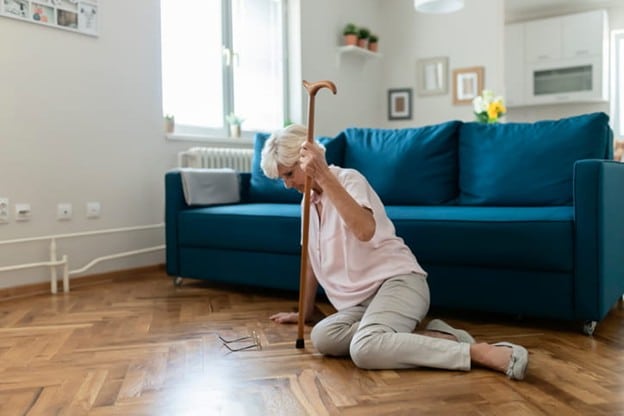
Many also aren’t aware that a fall can cause an elderly person to suffer a stroke. Since 14 million adults 65 and older fall each year, older adults, caregivers, and older adults’ family members must understand the relationship between falls and strokes, and how skilled nursing facilities can support seniors who’ve suffered a stroke and help with fall prevention.
Why Are Falls Common In Seniors And What’s Their Overall Health Impact?
Falls are common among seniors for several reasons:
- Bone and muscle deteriorate as people age, causing an unsteady gait.
- Medications for common health issues can affect seniors and their balance.
- People over 64 years of age have an increased risk of vision issues, which can increase the risk of falls from environmental hazards they don’t see.
- People 65 and older are more likely to suffer chronic health issues that affect their balance and stability.
Falls are the number one cause of death among adults ages 65 and older. They’re also the number one cause of injuries among this age group. Over 5.1 million (37%) of those who fall need medical care for their injuries.
Traumatic brain injuries (TBIs) are also a common health issue stemming from falls, and TBIs increase the risk of suffering a stroke.
The Connection Between Falls And Increased Stroke Risk: How A Fall Can Signal Or Contribute To Stroke-Related Health Issues
Medical studies have revealed that there’s an increased rate of falls prior to a person having a stroke, indicating falls could be a sign a person’s at risk of having a stroke within the next 36 months, particularly if the falls involve injuries. Falls involving TBIs and vascular damage pose an increased risk of stroke.
Suffering a fall is also stressful and frightening. Someone who falls can suffer from cardiovascular stress, which increases the risk of stroke.
Common health conditions affecting seniors, such as diabetes and high blood pressure, also increase stroke risk.
Additionally, those afraid of falling are less likely to be physically active. Since physical inactivity increases the risk of high blood pressure and diabetes, this is another direct relationship between falls and increased stroke risk.
Warning Signs Of A Stroke That Seniors And Caregivers Should Watch For
Common warning signs of a stroke include:
- Confusion
- Difficulty understanding others
- Dizziness
- Facial drooping
- Falling
- Memory loss
- Numbness on one side of the body
- Slurred speech
- Sudden intense headaches
- Vision issues
Since falls can precede stroke, it’s crucial to note increased issues with dizziness, weakness, and an unsteady gait, as well as any falls a senior has.
When combined with cognitive issues, such as memory loss and numbness in the limbs or on one side of the body, there could be a significant stroke risk.
Health Risks Associated With Falls
Health risks stemming from falls include:
- Broken bones
- Lacerations
- Subdermal hematomas
- TBIs
There is also a risk of delayed medical complications from falls and fall-related injuries. For example, broken bones may reduce mobility, causing high blood pressure, which increases their stroke risk.
How Does Haven Health Support Fall Prevention, Recovery, And Stroke Care?
Haven Health provides a safe, supportive environment for all residents. Our facilities are designed to provide residents with plenty of light, while reducing hazards that could cause falls.
We also provide assistive devices for those who are at risk of falling. Then, with physical therapy, residents can reduce their risk of falls by regaining muscle strength and improving their balance.
Lastly, those who’ve suffered a stroke will receive physical and speech therapy to help restore their health. Speech therapists help stroke victims strengthen their mouth and tongue muscles and improve verbal communication. Physical therapists help stroke victims regain muscle strength, balance, and coordination.
Practical Safety Tips To Reduce Fall Risk And When To Seek Medical Attention
Staying physically active helps reduce your risk of falls. Engaging in low-impact activities, such as Tai Chi or yoga, can help you retain muscle and bone strength.
If you’re experiencing health issues that affect your gait, you can use assistive devices and try activities like chair yoga.
Ways to reduce fall risks include:
- Add support in your bathroom: Add grab bars and non-slip mats to prevent falls.
- Good lighting: Ensure walkways in your home are well lit to avoid tripping on fall hazards.
- Remove fall hazards: Declutter and ensure carpet and flooring is secure to reduce the risk of tripping.
You should also discuss all medications with your doctor, address any dizziness you experience, and adjust medications as needed to reduce the risk of falls.
Stroke And Fall Prevention At Haven Health
Haven Health is committed to providing each resident with expert, personalized care to help them restore their health. Learn how our team supports fall prevention for seniors and helps individuals recover from falls, those at risk of falls, and those recovering from a stroke.
Sources:
Imoisili O., et al. (2024). Prevalence of Stroke — Behavioral Risk Factor Surveillance System, United States, 2011–2022.
Katz, D., et al. (2024). Stroke: Another Delayed Hazard of Traumatic Brain Injury, Even in Young Adults.
Older Adult Falls Data. (2026).
Risk Factors for Stroke. (2024).
Stroke Facts. (2024).
U.S. stroke rate declining in adults 75 and older, yet rising in adults 49 and younger. (2022).
Zhang, L., et al. (2025). Injurious Falls before, during, and after Stroke Diagnosis: A Population-based Study.